 Skip to content

How Refrigerated Truck Manufacturers Are Powering Malaysia’s Cold Chain Revolution
Malaysia’s economy continues to expand at a steady pace. Trade routes grow busier each year. Among the many changes, one area stands out clearly. The way businesses move temperature-sensitive goods has transformed completely. Fresh food, medicines, and flowers now travel across the country without spoiling. This progress depends on one critical piece of equipment. The cooling truck sits at the heart of this system. Behind these vehicles stand the companies that build them. Refrigerated truck manufacturers have stepped up to meet rising demand. They create solutions that keep goods safe and fresh. This article explores how these makers power Malaysia’s cold chain revolution.
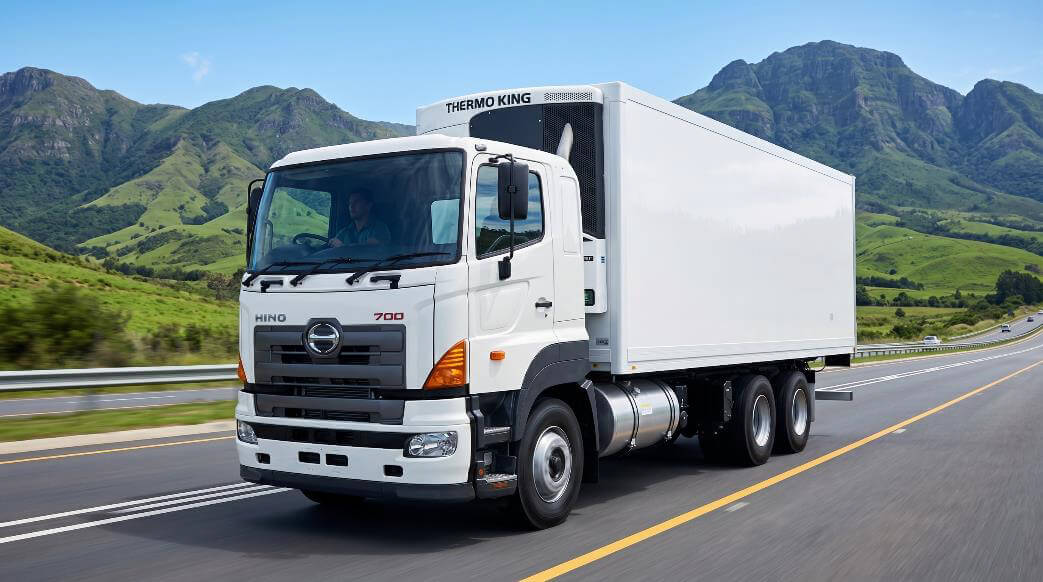
Why More Malaysian Businesses Are Turning to Refrigerated Trucks
The shift toward cooling trucks did not happen overnight. Several factors drove this change. Consumer expectations have risen sharply. People want fresh produce available year-round. They expect medicines to arrive in perfect condition. Businesses responded by upgrading their delivery methods. The old ways no longer work well enough. Regular trucks cannot maintain proper temperatures. They expose goods to heat and humidity. This situation leads to waste and unhappy customers. Cooling vehicles solve these problems effectively. They provide stable environments for sensitive cargo. More companies are now recognising this advantage. They are investing in these specialised vehicles. The trend continues to gain momentum across the country.
The Rise of Cold Chain Logistics
Cold chain logistics has become a vital part of modern trade. This system maintains the correct temperature for products throughout the entire process. Each step matters greatly. The cooling truck plays a central role in this process. It bridges the gap between storage and delivery.
Growing Need Across Different Industries
Many sectors now depend on these vehicles. Food producers lead the way. Pharmaceutical companies follow closely. Flower exporters also rely on them heavily. Each industry has unique requirements. Manufacturers adapt their designs to meet these varied needs.
Why Reliable Cooling Trucks Matter
A breakdown during transit causes major problems. Spoiled goods create financial losses. Damaged medicines put lives at risk. Reliable vehicles prevent these disasters. They help businesses feel confident during deliveries.
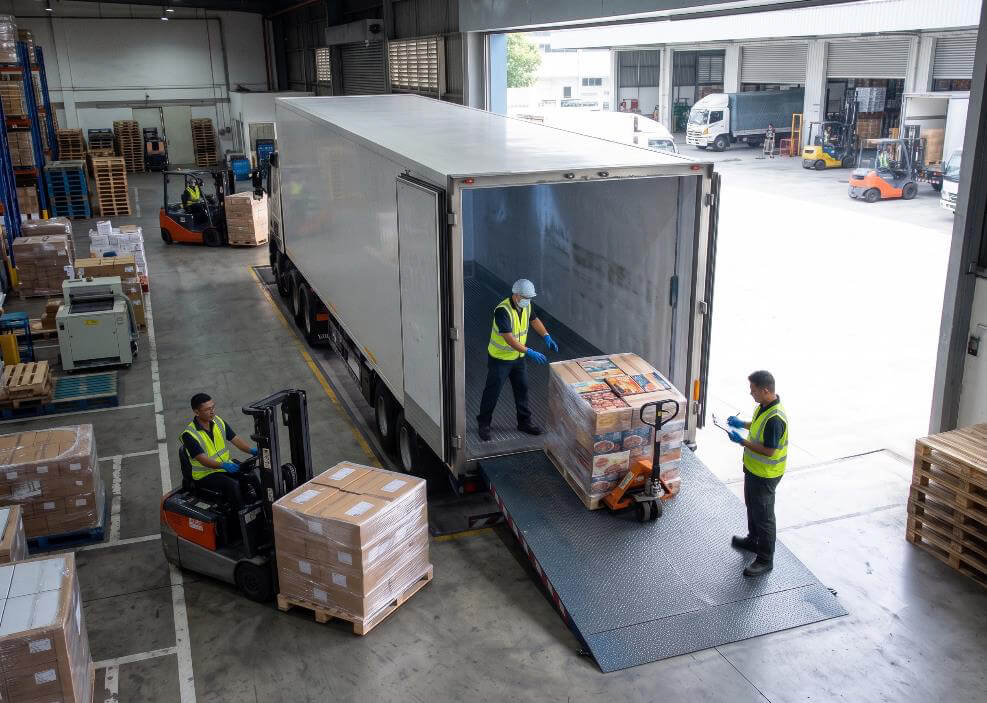
What Makes a Modern Refrigerated Truck Stand Out
Today’s cooling vehicles differ greatly from older models. Technology has advanced rapidly. New features improve performance significantly. These trucks offer better control and monitoring. They protect cargo more effectively than ever. The build quality has also improved substantially. Stronger materials extend the life of each vehicle. Energy efficiency has become a key focus. Modern units consume less fuel while cooling better. These improvements benefit both operators and the environment. These changes are a significant advance for the industry.
Smart and Precise Temperature Control
Advanced systems maintain exact temperatures automatically. Sensors monitor conditions constantly. They adjust cooling output as needed. This precision keeps different products safe during transit.
Strong Insulation to Keep Cargo Safe
High-quality insulation forms the foundation of every cooling truck. Thick walls prevent heat from entering. Special seals keep cold air inside. This design maintains stable temperatures throughout the journey.
Better Efficiency, Safety, and Compliance
Newer vehicles meet strict safety standards. They include emergency alarms and backup systems. These features protect both cargo and drivers. Compliance with regulations comes naturally with modern designs.
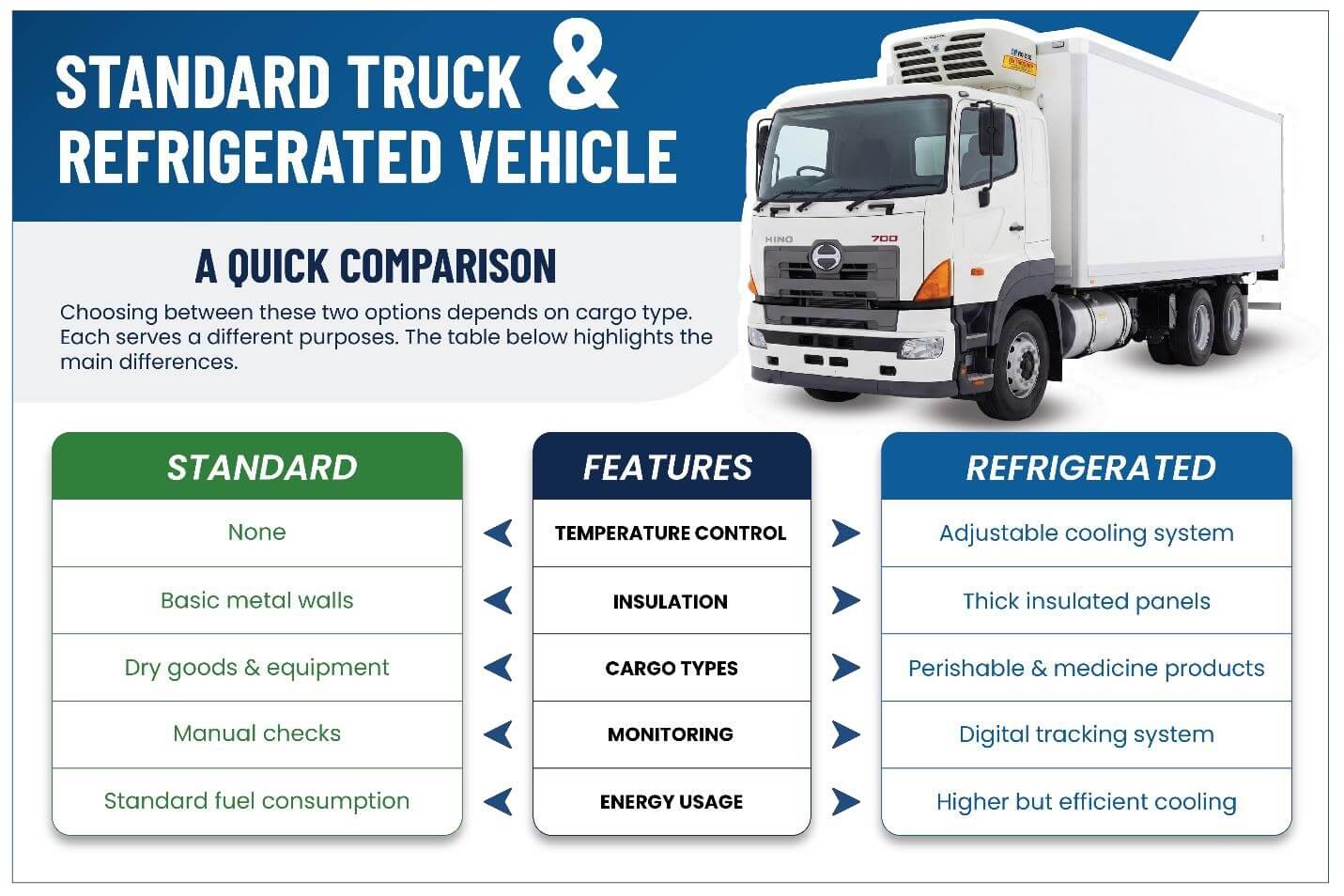
Standard Truck vs Refrigerated Vehicle – A Quick Comparison
Choosing between these two options depends on cargo type. Each serves a different purpose. The table below highlights the main differences.
How Refrigerated Trucks Keep Malaysia’s Cold Chain Moving
The concept of cold chain transportation depends on reliable vehicles. These trucks form the backbone of the entire system. They move products from farms to factories. They carry medicines to hospitals. They deliver fresh food to supermarkets. Every trip must maintain the right temperature. Any break in this chain causes problems. Modern trucks prevent these breaks from happening. They provide consistent cooling throughout each journey. This reliability keeps the whole system functioning smoothly.
Moving Food and Beverages Safely
Fresh produce needs careful handling during delivery. Seafood requires freezing conditions. Dairy products need stable temperatures too. Cooling trucks meet all these different requirements effectively.
Delivering Medicine and Healthcare Products
Vaccines lose their effectiveness when exposed to heat. Blood samples need constant cooling. Many medicines have strict temperature requirements. These vehicles ensure safe delivery of healthcare items.
Cutting Waste and Improving On-Time Delivery
Spoilage costs businesses large amounts of money. Cooling trucks reduce this waste significantly. They also help maintain delivery schedules. Reliable vehicles mean fewer delays and happier customers.

What’s Next for Refrigerated Transport in Malaysia
The transport refrigeration industry continues to evolve. New technologies emerge regularly. These innovations promise even better performance. The future looks bright for this sector. Businesses will benefit from ongoing improvements. Manufacturers keep pushing boundaries. They develop solutions for emerging challenges. The pace of change shows no signs of slowing. Companies that stay informed gain a competitive edge. They adopt new technologies early. This forward-thinking approach brings clear advantages.
Smarter Tracking and Monitoring
GPS systems now track vehicle locations precisely. Temperature data streams to operators in real time. This visibility improves decision-making during deliveries. Operators address problems before they escalate.
Greener and More Eco-Friendly Cooling
Manufacturers now use environmentally friendly refrigerants. New cooling systems consume less energy. These changes reduce the carbon footprint of deliveries. Sustainability has become a priority for the industry.
New Trends Shaping the Industry
Electric cooling trucks are entering the market. Autonomous features appear in newer models. Data analytics is helping to optimise delivery routes. These trends will reshape transport in the coming years.
Final Thoughts
Malaysia’s cold chain continues to grow and improve. Refrigerated truck manufacturers drive this progress forward. They build vehicles that protect valuable cargo. Their innovations benefit businesses across many sectors. Food stays fresh longer. Medicines remain effective during transit. Flowers arrive in perfect condition. These outcomes depend on reliable equipment. The industry shows no signs of slowing down. New technologies will bring even better solutions. Businesses that invest in quality vehicles gain clear advantages. They reduce waste and build customer trust. The future of cold chain transport looks promising for Malaysia. Companies must stay informed about emerging trends. This knowledge helps them make better decisions for their operations.
Frequently Asked Questions
They keep temperatures steady inside the cargo area. Strong insulation blocks outside heat. The cooling system runs continuously during transit.
Yes, these vehicles handle seafood very well. They maintain the cold temperatures that fish and shellfish need to stay fresh and safe.
Most units range from freezing to chilled conditions. Some go as low as -25°C for frozen goods. Others stay just above freezing for fresh produce.
Many medicines lose strength when warm. Vaccines and insulin need constant cooling. These trucks keep healthcare products effective and safe.
Yes, some vehicles have separate compartments. Each section maintains a different temperature. This design allows mixed loads in a single trip.
