 Skip to content

The Changing Evolution For Cold Chain Logistics with Fully Electric Commercial Vehicle and EV Refrigeration System
Commercial transportation is evolving rapidly. In Singapore, a city-state that thrives on logistics and serves as one of Southeast Asia’s busiest trade and distribution hubs, businesses are increasingly adopting Electric Vehicle (EV) technology. This shift is driven not only by stricter emissions regulations but also by the growing expectation for sustainable business practices.
At the same time, demand for reliable cold chain logistics continues to rise, whether for delivering fresh produce to supermarkets or transporting temperature-sensitive pharmaceuticals. With Singapore’s push toward greener commercial fleets and tighter environmental standards, this demand is expected to grow even further.
These two trends are converging and reshaping the future of logistics across the region.
What Is an Electric Vehicle (EV)?
An Electric Vehicle (EV) is powered by electric motors that draw energy from rechargeable battery packs rather than an internal combustion engine. The result is zero tailpipe emissions, contributing to improved urban air quality and supporting national carbon reduction targets.
As battery technology advances and charging infrastructure expands across Southeast Asia, EVs are becoming an increasingly practical and cost-effective solution for commercial fleet operators.
What Is an EV Refrigeration System?
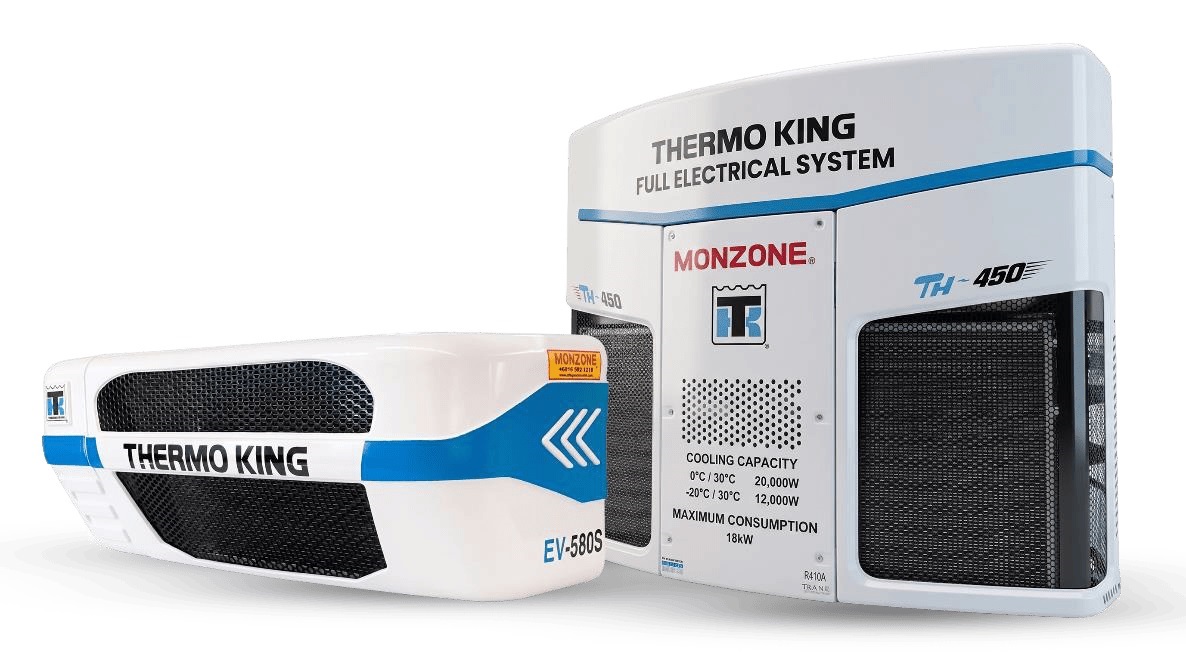
An EV Refrigeration System is a cooling solution specifically designed for electric trucks. Unlike conventional refrigeration units that rely on diesel-powered generators, EV refrigeration systems draw power directly from the vehicle’s main battery or a dedicated auxiliary battery pack.
This enables consistent temperature control throughout the delivery journey while eliminating emissions and significantly reducing noise levels. For businesses handling temperature-sensitive products, this level of reliability is essential for maintaining cold chain integrity.
Benefits of Electric Refrigerated Trucks
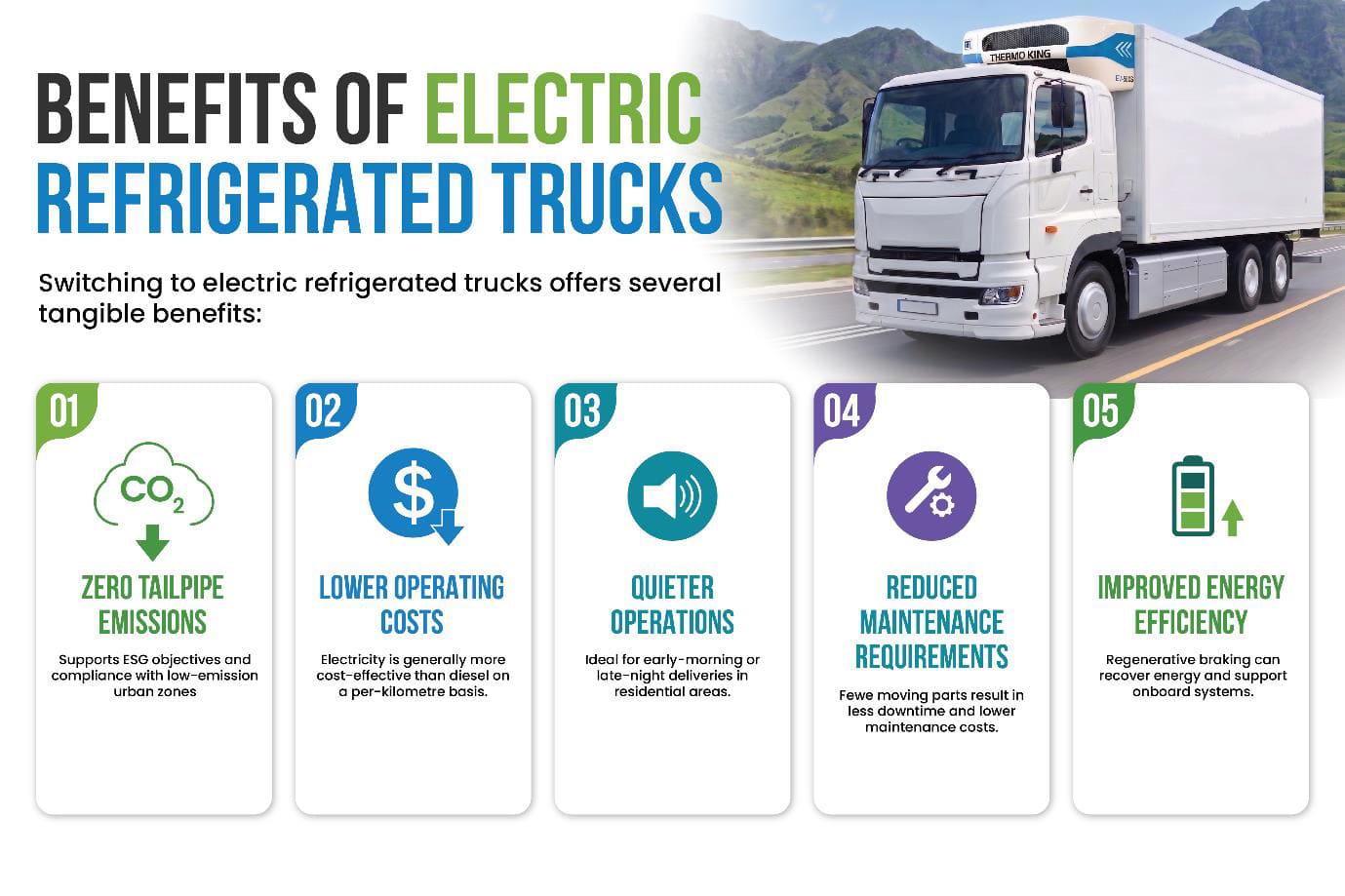
For logistics operators in Singapore and Malaysia operating within densely populated urban environments, these advantages translate into both environmental benefits and measurable business value.
The Role of EV Truck Refrigeration in Modern Logistics
The transition to electric vehicles is not solely about sustainability; it is also about improving cold chain performance.
Modern EV refrigeration units can maintain precise temperatures ranging from -25°C for frozen goods to +25°C for temperature-controlled products. This level of accuracy helps ensure food safety compliance and pharmaceutical cold chain integrity throughout the entire delivery process.
As Southeast Asian markets place greater emphasis on supply chain transparency, regulatory compliance, and sustainability, operators using electric refrigerated trucks are increasingly well-positioned to secure contracts with major retailers, healthcare providers, and export-oriented food producers.
Conclusion
EV technology, advanced refrigeration systems, and purpose-built electric refrigerated vehicles are no longer concepts of the future. They are already operating on the roads today, delivering goods efficiently while transforming cold chain logistics across Singapore, Malaysia, and the wider region.
For businesses evaluating their next fleet investment, the case for electrification is becoming increasingly compelling. Going electric is not only an environmentally responsible decision but also a strategic commercial investment. The cold chain of tomorrow runs on electricity—and that future has already begun.
